
Sparkle Scrubbies and Mesh Bag
Brenda K.B. AndersonMaking the switch to reusable makeup remover pads is an easy way to reduce waste and save money. In this session with Brenda K.B. Anderson, you’ll learn how to turn leftover bits of dishcloth cotton yarn into practical, eco-friendly scrubbies, perfect for a stash-busting project that also refreshes your daily routine. Brenda will also show you how to create a coordinating mesh laundry bag to keep your scrubbies clean and organized.

Hi, everybody. Welcome to our live event. My name is Brenda K.B. Anderson, and I am a crochet, knit, and sewing instructor, creator, designer. And what I do is I dream up all these little projects that I like to make while I'm at my house, and then I come into the studio and I teach you guys what I've dreamt up.
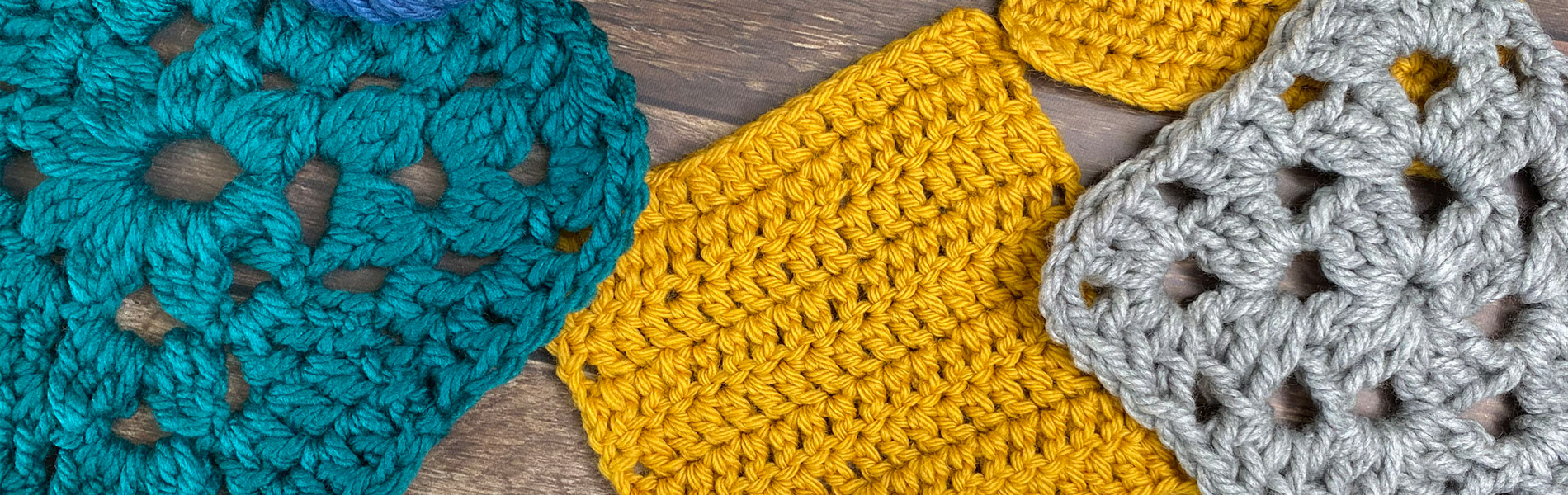
So this is my latest project, my latest crochet project. This is called Sparkle Scrubbies and Mesh Bag, and this is what we're gonna be making today. So here's the little mesh bag, and this can you can use this as a laundry bag or you can use this as a storage bag for all these little scrubbies that we're, we're gonna be working up. So this project was, born out of just wanting to reduce, some of the waste. I don't wanna use, my disposable makeup wipes anymore.
I've decided I just wanna start using something that I can wash instead, so I created a whole bunch of these, and I figured some people would be interested in these as well. And y- of course, you don't have to use these for your face. You can use them for something else, s- scrubbing little pots or pans or anything like that. and they have this, like, a little bit of a post stitch ridge kinda rating out, radiating out from the center, and that gives it a little bit of extra scrubbing power, and that's where the name came from. So the little sparkle is this sort of radiating out I, I When I first created these, I thought, "Oh, these really look kind of like citrus stuff." but then the more I worked on them, the more I just started s- see- getting this sort of mid-century modern vibe of, like, I don't know what they're called, but the little radiating out, little, like sometimes they're on clocks.
Sometimes it's just a thing on the wall. I don't know what they're called, but kinda radiating out, that sort of motif. And, I was thinking about that, kinda working with these cheerful colors and kind of, like, a happy, scrubby s- sparkly bubble kind of situation going on here. so I made this bag so that you could fit a whole bunch of these in it and launder them because I didn't want them to get lo- I for sure did not wanna hand wash these. That is for sure.
and I didn't want them to get lost in my laundry, so we've got these two little strands that we can pull on and cinch that up and run it through the laundry. I have found that this stays closed when I do my laundry laundering, but if you're worried about it, you could do, like, an extra little knot on there. Maybe don't tie it too tight so you can easily get it to come apart later. but that seems to work really well. They're, I, I actually am going to be making two, using two bags.
One is gonna be, like, the storage bag for the clean ones, and then the other one I'm gonna have hanging up, like, on the inside of my, bathroom cabinet to catch the ones that have been used. And then I will be able to kinda alternate. You know, throw one in the laundry and have the, the new one ready to go. So that's my plan. and this is, you know, this is a really simple project.
This is great for, like, I would say an advanced beginner because we are gonna be using post stitches, some kind of interesting, you know, some little details. We're doing a little bit of scallop e- edging along there and a mesh stitch. So this would be something you could do if you've maybe made a washcloth or a couple other things and you feel comfortable holding your crochet hook. Like, as long as you're comfortable holding the hook and holding the yarn, then this is definitely approachable for you. So I do have full instructions.
You can go ahead and download this. It's the full directions. There's pictures, and there's also charts if you are a chart person. so s- so that way you can, if you're not really much of an instruction reader and you'd rather look at a chart or just watch the video, you should be able to, finish this project that way. You don't have to, you don't have to learn how to read the pattern if you don't want to, although I do have a link in there in case you are open to learning how to read patterns.
There's a link to another live tutorial that I did on how to read patterns because, I just feel like if you're You know, I don't want people to be limited by, oh, I can't make that project because it's just a written pattern or something like that. If you're out there crocheting and you wanna make something, you know, I wanna r- remove as many barriers as possible, so it's a good thing to learn. All right. So we're gonna start out first by making a scrubby. I'm gonna teach you guys how to do that first, and then we're gonna make the mesh bag after that.
So to make the scrubby, Oh, first let me talk about materials. I almost forgot. So I use this, or I, I kind of developed this project with, washcloth cotton or k- dishcloth cotton in mind, so this is just, like, a kitchen cotton. it is, wo- like a worsted weight, 100% cotton. You can find it in big box stores.
Craft stores definitely have this. it's just a staple. The, the specific brand, the colors, all that stuff, all that information for the specific yarn that I'm using, that's all in your download if you're interested in learning about that, but any dishcloth cotton will do. any worsted weight, which is the number four, if you look at your yarn label and it has a CYC number, or, like, the little skein of yarn picture and a number, it should be a number four. and then I am using a G hook, which is a four millimeter hook, but you will use whatever hook you would like to in order to get You know, to, to be honest, you don't really need to match my gauge for any part of this.
you should be somewhere sort of near my gauge for the mesh bag, but you'll see what size it's turning out. It's not a huge project, so you can adjust your hook size accordingly if you feel like it's turning out too big or the stitches are too tight. really, it doesn't matter. It doesn't matter if your bag is bigger than mine or smaller than mine, as long as you're happy with it. So, so that's good.
Good news for those of you who don't love swatching, and actually, making one scrubby is pretty much like swatching anyway, so it's basically a little shortcut. All right, so we're gonna start out Oh, and, and besides the yarn and the hook, you'll just need a tapestry needle. Um-And that's about it. You may want to use a safety pin for weaving your cord in, but I don't usually use that. but that Yeah, that's about it.
All right, so we're gonna start out by making a magic ring. So you can make your magic ring however you like. Adjustable loop, magic ring, I think there are other names that I'm not remembering right now, but, this is how I like to teach it because I feel like it's straightforward to learn it this way, but you can do it however you like. So I just draw a little loop like this, so I have the end of my yarn tail here. The yarn connected to the ball is right here.
So I'm gonna take that little loop, and I'm gonna flip it over onto that strand of yarn. Okay? So just fold it like this, and then I can put my crochet hook underneath that little strand of yarn that goes through, through the little zero. So I just place my hook there like that, and I'm gonna tighten it just a little bit, and then I'm going to chain one. So I just yarn over and pull that through, and that anchors my yarn, and then I'm ready to go.
One further step that I like to do, because I like to crochet over two strands instead of crocheting You know, if, if I were to just start crocheting here, I could, and I could still cinch this closed. But I like to take this little circle and flip it like this, just turn, twist it like that, and then I'm able to crochet over the double strand right there. Okay, so we're gonna start out by, working a round of double crochet. So we're going to chain two, one and two, and that's not gonna count as a stitch. We're That's, From this point on, we're not gonna start with a beginning chain at the beginnings of our rounds.
It's just kinda so we could get up to the height of a double crochet, so just ignore those two chains from this point onward . And then we're gonna do 10 double crochets into our adjustable loop. Okay? So to do a double crochet, you're gonna yarn over, insert into the loop, yarn over, pull up a loop, yarn over, pull through two loops, yarn over, pull through two loops. Okay?
So that's our very first stitch of the round. And you can go ahead and put a stitch marker in the top because that'll remind you that that is your first stitch. That's the top of your first stitch, and hopefully it'll remind you not to try and work into these chains, okay? We're just gonna ignore those. So we did our first double crochet, and we're gonna do nine more.
So yarn over, insert, yarn over, pull up a loop, yarn over, pull through two, yarn over, pull through two. All right? So we've got two, three. Whoops. Four, five, six, seven, eight, nine, and here's our 10th one.
And now we can go ahead and just tighten that up. We'll just pull on our beginning yarn tail and cinch that up. Okay, so I don't even join this round. I just start the next round by making an extended single crochet 'cause I'm basically gonna be working in a spiral. You ca- If you That makes you uncomfortable, normally we do join our extended single crochets No, sorry.
Normally, we do join our double crochets. We are making double crochets here. Sorry, I didn't mean to confuse you. I'm jumping ahead. Normally, we do join our double crochets at the end of the round, but I find for this particular project, I don't bother.
I just jump right in with an extended single crochet in that very first stitch. So, let me show you how to make an extended single crochet. So here's our first stitch. That was the one that was marked. We're going to insert, yarn over, pull up a loop, yarn over, and pull through one, and then yarn over and pull through two.
Okay? So it looks like there's two little Vs stacked up on top of each other. That's called an extended single crochet. And then we're gonna place a front post double crochet around the post of the stitch we just worked into. Okay, so if you are, are ever confused about what post belongs to the top, you know, the, th- this is the top of the stitch right here, where we just worked, that little V.
The post should be just below and/or slightly to the left if you're a right-handed crocheter. If you are a left-handed crocheter and you crochet like a mirror image of what I'm crocheting like, then your post might be just ever so slightly to the right of the very top of your stitch. but regardless, this was our beginning chain that we're never working into, and here is our very first, double crochet. So we're gonna work around that post. So to do a front post double crochet, what we're gonna do is very similar to a regular double crochet, except instead of working our You know, normally we work here into the top of our stitch.
We're gonna be working around the post. So we yarn over just like normal. Then we're gonna insert our hook before the post of the stitch, and we're gonna come out after that post. We're gonna yarn over and pull that through, and then we're gonna complete as though we were making a regular double crochet. So yarn over, pull through two, yarn over, pull through two.
And so working around that post kinda raises it up. It might not be very obvious at first right here, but on the next round you'll start to see them pull, pull forward. Okay, so n- the next stitch is right here between my thumbs. That's the next double crochet. We're gonna first work an extended single crochet into the top, and then we're gonna work a front post double crochet around the post.
All right? So our first stitch is the extended single crochet. So we're gonna insert, yarn over, pull up a loop, yarn over, pull through one, yarn over, pull through two.Then we're gonna do our front post double crochet around that same stitch, around the post of that stitch. So we're gonna yarn over, insert around the post, yarn over, pull up a loop, yarn over, pull through two, yarn over, pull through two. Okay, and we're just gonna keep repeating this.
Every single double crochet that we have left, so we've already done two, we've got eight more left, it's going to first get an extended single crochet. So here's our extended single crochet, and then it's gonna get a front post double crochet around that same stitch like that, okay? So here we have an extended single crochet, and then we have a front post double crochet. So extended single crochet, front post double crochet. Extended single crochet, front post double crochet.
Extended single crochet, front post double crochet. Fr- extended single crochet, front post double crochet. All right, we're almost all the way around. So this is round number two. The thing I really like about extended single crochets is they're nice and flat, so it makes a really nice contrast with these post stitches in between.
Well, there's lots of things I love about extended single crochet. If you guys have watched my videos before, you've probably noticed that I gravitate towards that stitch a lot. Okay, so we've made it all the way around. There was our very first extended single crochet right there, and our first front post double crochet. So now in round number three, we're going to do two extended single crochets into the extended single crochet, and then one post stitch into the post stitch, okay?
So here's the top of our extended single crochet, so we're gonna do two stitches there, so one and two, and then we're gonna do a front post double crochet around that post, and then we'll move to the next stitch. Two extended single crochets, one, two, and then a front post stitch around the p- the front post stitch, okay? So right there. So we're doing t- two extended single crochets, so we're still increasing, but we're increasing in every other stitch now. So here's our increase where we do two extended single crochets into our extended single crochet, and now we're doing a post stitch into our post stitch.
Okay, extended, extended, and then a post stitch. Extended, extended, whoops, and then a post stitch. All right, here we have an extended single crochet. So we're just doing like stitches into like stitches, if that makes sense. So you can kinda read your stitches as you go around.
If you come to a post stitch, you're gonna do a post stitch into it. If you come to an extended single crochet, you're gonna do two extended single crochets into it. All right, we just have a few more stitches left. Oh, this is our last group of stitches. Here's our very last post stitch.
And now we're going to just do a s- a slip stitch into each stitch around. Okay, so you might be wondering, "Why are we bothering with that?" And I feel like it just makes the edge of our little medallion that much, more smooth, and it, it makes it a little stiffer, so it gives it a little bit more body, and it so it doesn't curl up quite so much. So we're going to make a slip stitch here. So we just insert into that v- that was the first extended single crochet f- of the round. Oh, and by the way, if you're newer to crocheting, I would definitely recommend as soon as you do that first stitch of the round, you just put a stitch marker right into it, okay?
So this was your first stitch. You would put the stitch marker right there underneath that V that sits on the top. And that'll help you keep your place, so you'll know how many stitches to do until you get to the end of your round. So we're gonna go ahead and just do a slip stitch into each stitch around. So we just insert, grab that yarn, pull through the fabric, pull through the loop on the hook, just like that.
So this is gonna make it look Just it gives it a little bit of extra polish, just makes it look a little bit more, I don't know, more finished, I guess. Straightens out that edge a little bit. Just making those slip stitches all the way around, one into each stitch around. All right, here is our last stitch. And then I wanna show you how to do an invisible join.
So you don't have to do it this way. You could just go ahead, cut your yarn, pull it through, and weave it in. But to make things a little bit, just a little bit smoother around the edge, I'll give myself, you know, a little bit of a yarn tail there. And then I'm just gonna go ahead and pull that through like this.Then I'm gonna use a yarn needle. There we go.
I'm gonna use a blunt tip yarn needle or tapestry needle and I'm going to skip I'm gonna So this was the last stitch we worked into right here. I'm gonna skip the next stitch, which is right there, and I'm gonna go underneath the stitch just in front of it right here. So I'm gonna go from front to back underneath that V like this, and I'm gonna pull on this until this strand looks like about the length of one of these stitches. Okay? So I'm gonna kind of pull on that a little bit, and then I'm going to go back down into the stitch where it came from right here, and I usually go underneath a couple of loops, slide it downward just a little through, to catch the back of the fabric, and I just pull on that until it looks like one of the matching stitches.
So we just pull on it a little bit more, and then that blends it right in. It looks nice and smooth. You can't really even tell where you fastened off. So that's, like I said, that's not absolutely necessary, especially since this is a very utilitarian project, but it doesn't Once you get in the habit of doing this, you know, whenever you fasten off on, on a piece that's worked in the round like that, it doesn't seem like it takes much more time. You just pull it through, and you just kinda automatically, just, you know, run your needle down through that stitch and, and it just, yeah, it just is a such a nice little polished look.
All right. So then you can go ahead, weave in that tail. I'm gonna pull on this beginning yarn tail one more time and then weave it in. So just weave it into the back of your work. Try to kinda snake it back and forth in a couple of different directions.
That really helps, as well as, you know, if you wanna split through a strand of your yarn, that seems to give it a little bit of extra friction, so it's much less likely to slip out. And you w- really wanna take your time to weave in these ends because there's You know, it's such a small, quick project, and it might seem like, wow, I'm spending kind of a large percentage of my time weaving in ends. but it's worth it because you're gonna be throwing these through the laundry over and over and over again, and it's kind of annoying if something starts to co- You're, you're definitely not gonna wanna get out your yarn needle and weave on your end later on. It's better to do it now. So one thing that I really love about this stitch pattern is, you know, you have those little grooves there to kinda help you with the scrubbing, and then the very center of it is, like, a little bit thinner, so it's recessed a little, so when you're using your fingers, they kinda sit in that little There's, like, a little bit of a divot right there.
So it just, it just kinda works out that the stitch, the stitch pattern, the way the stitches all come together here, it just makes it a little bit more, easy to use. So that's it for the scrubby. So I just made the, like, a whole bunch of those in a variety of leftover yarn that I had, and now I wanna show you how to make the, the little mesh bag. So here in our instructions, I h- I have a chart right here. This is showing the bottom of the bag.
I wanted to design a bag that had that sort of, kind of rounded edges to it. It, you know, it's just one additional little step, and it, it doesn't take really any extra effort, but I, I just, it, I don't know. It, I, I really kinda love getting into the details of what makes, something that I design, like, functional and also look really cute. And so I, I knew that I didn't wanna have, like, the 90-degree angle corners on it, so I w- I am beginning the bottom of the bag by working in the round and increasing a little bit on the two edges to kinda create that little curved, curved bottom of the bag. So that's what's going on here.
So I'm just gonna be working from the chart, but there are full instructions. we're gonna start out with a chain of 21, so I'm gonna place a slip knot on my hook and go ahead and chain 21. So 1, 2, 3, 4, 5, 6, 7, 8, 9, 10 Whoops. 11, 12, 13, 14, 15, 16, 17, 18, 19, 20, 21. All right, so I've got my 21 stitches.
Let me just double-check and make sure. I just don't wanna tell you the wrong number. Yep, 21. Okay. Oh, we have some hellos here, s- hey, Sunny.
Thanks for saying hi. and Sunny says, "Is the texture..." Is that the beginning of a question, or maybe you're just commenting that you like the texture? Let me know. oh, and Sandy's here again. Hi, Sandy.
Welcome back. Sandy was in my last live event. that was a knitting one, and I was teaching how to make, like, this lacy earring organizer thing in a thrifted frame. cool. Sandy from Austria, and I recognize your name and that you're from Austria, I feel like, from previous events, so thank you for coming back.
I always appreciate it. Oh, and Felicia's here. Hi, Felicia. Hello. and we've got Lena from Dubai.
Wow, you guys are f- tuning in from all over the pla- place. How cool is that? Thank you. Thank you for being here, and thanks for saying hi, everyone. Hi, Mary.
Hi, everybody. Okay, so we have 21 chains here, and we're gonna start by making a double crochet in the fifth chain from the hook, but I'm gonna be working into the bottom of the chain. So what I mean by working into the bottom of the chain is if you lay your chain down on the table and you see all those little Vs like we do here, if we turn the Vs over so they're touching the table like that, now we see all these little horizontal dashes on the back, and-When I begin working into my chain, I almost always work into those dashes. I almost always work into the bottom of my chain It's, to me, it, like, looks a little neater. It's also easier for me to work into just that chain instead of underneath the V, and it makes things symmetrical.
So we're going to start by working into the fifth chain from the hook, so we're gonna count one, two, three, four, and five, and then we're gonna make a double crochet. So we're gonna yarn over, insert, yarn over, pull up a loop, yarn over, pull through two, yarn over, pull through two Okay, so this, this is counting, this is our first double crochet, but this right over here is going to count as a double crochet and a chain one right there Okay? So this is a double crochet, chain one. Okay, and so now we're going to chain one. So i- i- in case you're following along on the chart, we've worked all these little chains starting on the black chain.
So, so one, two, three, four, five, six, seven, eight, nine, 10, 11, 12, all the way up to 21. This will be the 21st one right here. And then we worked a double crochet into the fifth chain from the hook. Okay, so if you count backwards, there's five, four, three, two, one. Okay?
So we worked this double crochet right now. Okay? And then this right here is counting as our, this little chain, so one, two, three, four, those four stitches are counting as a double crochet and then that v- very first chain one space. Okay, so now we have, we've got a double crochet, and then we chained one. I'm gonna back up a little.
So that's that first double crochet. Then we chain one, and we skip a s- skip a chain of the foundation chain. So we're gonna skip that chain, and we're gonna do a double crochet in the next one. And then a chain one. And then we're gonna skip a stitch, double crochet, chain one, skip a stitch, double crochet, chain one, skip a stitch.
And we're just gonna continue doing this all the way till we get to the end of our chain. And then there's something extra we're gonna do at the end of the chain. I have a surprise waiting for you. All right, so you're just continuing to make that chain one, skip a chain, work into the next chain, and make your double crochet. Okay, so here we have two chains left.
We're skipping this one, and we're gonna work into that very last one. So we yarn over, and we're making our double crochet. And so we've just worked that double crochet right there, and you can see there's all these double crochets pointing to that last chain. So what we're gonna do is we're going to chain one, double crochet, chain one, double crochet, chain one, double crochet. And those are all going into the same chain that we just worked into, and they're gonna kinda wrap around the bottom of the chain, which is actually the top of the chain, 'cause we worked across the bottom of the chain.
If that doesn't make sense, that's okay. So we're gonna be basically adding more chains and double crochets all into that very same stitch we just worked it to, into. Okay, so three more. So chain one, double crochet in the same spot, chain one, and I'm just gonna move this yarn tail over here just to get it out of the way and kinda crochet over it. You don't have to.
You can just let it hang, hang, hang out wherever it, it lands. It's no big deal. Okay, so we're gonna do two more double crochets and chain ones. So here's a double crochet, chain one, double crochet, chain one. So you can see how we just kept going, and it's wrapping around that kinda end, and there should be four double crochets radiating out, so one, two, three, four, one, two, three, four, rating, radiating out from that very last chain.
Okay? And now we're gonna work our way across. So I already did my chain one. I just kinda automatically did that. So I've got a double crochet, chain one, and I'm going to skip the next stitch, which is right here, and I'm gonna work into the bottom of this stitch, which is actually the top of our chain.
You can see all those little Vs now. Now we get to work into those. So here's our double crochet. And we're gonna chain one and a double crochet into the, basically the opposite side of where every one of these double crochets already are. That's where we're gonna put one.
They're gonna mirror each other. So I've already chained one. I'm skipping this chain one. I'm working into this, it's really th- the foundation chain, but it's just on the bottom of that double crochet, if that makes sense. Chain one, skip a stitch, double crochet, chain one, skip a stitch, double crochet, chain one, skip a stitch, double crochet, chain one, skip a stitch, double crochet, chain one, skip a stitch, double crochet.
And then here we have, so we are working in these blue stitches here, okay? So let me turn it this way so you can see what I'm doing. So here we have those four stitches on the end. We're working our way across in these blue stitches here. And then we're going to have a double crochet, chain one, double crochet, chain one, double crochet, chain one into this chain.
So that chain is over on the end here. So we're gonna do, actually, we're gonna do one more double crochet. sorry, chain one, skip one, double crochet right here.Now we're all the way up to where we're gonna be making all these stitches. So there's a total of three sets of a double crochet chain one. So double crochet, chain one, double crochet, chain one, double crochet, chain ones and those are all going into that chain right there.
So we're gonna count so right where this double crochet is the chain below is the one we just worked into, so we just worked into here. Then there's a chain right there next to it then the following chain which is right here is where all of the stitches are gonna be worked into. Okay? So we're skipping this chain and we're gonna work into this chain and we're gonna do a series of Wait, did I do my chain one? I did not.
Okay, so I'll do my chain one. So there's that double crochet. There's a s- chain right there. There's a second chain right there. Okay, that's where we're working into and we're gonna do a double crochet, chain one and into the same spot double crochet, chain one and double crochet.
And we'll land with one more chain one and then we're going to make a slip stitch to kind of join to this. Remember how I said that this counted as a double crochet and a chain one? So we have to look at where, where that double crochet is right here. There's a chain one right there and then this is where we slip stitch to. Right there, that very next chain.
So we're gonna do a slip stitch right here like that. Okay? So you can see what we've got so far. And then to start the next round we're going to chain two. That's gonna count as a double crochet.
If you'd prefer to chain three instead for a double crochet, you can absolutely do that instead. but in this pattern I just kept it to a double, to two chains, 'cause I felt like it just looked a little bit better for me the way I stitch. And then here, let me turn it this way. We're right on the red which is round number two. So we've got our two chains that count as a double crochet then we have one more chain and that's gonna count as the chain one.
So here we have like a double crochet and a chain one. So then we're gonna skip that chain one space and we're gonna work a double crochet into the top of the next double crochet which is right here. Okay, so this is what we have so far. The beginning of round number two and we're going to chain one, double crochet into the double crochet, chain one. So every time we chain, chain one, we're s- also skipping that chain one space and then we're working a double crochet into the top of our double crochet like that.
Okay? Chain one, skip a chain, then we're gonna do a double crochet. Chain one, skip a chain, double crochet. Chain one, skip a chain, double crochet. Chain one, skip a chain, double crochet.
Chain one, skip a chain, double crochet. Okay, now we're at that section where we have all four of those double crochets kinda radiating out from the same place. So if we find that in our chart, that's right here, you can see we've got two double crochets pointing at this double crochet. So that means we're going to do double crochet, chain one, double crochet into that double crochet right there and then the same thing, double crochet, chain one, double crochet into that double crochet right there. So if you look at the four chain or four double crochets here, this one we just work one double crochet into.
This one we're gonna work two into. This one we're gonna work two into and this one we're gonna work one into. All right? So what that looks like is this. So we've got our chain.
I did my chain one, skipping a stitch. So right here in the first of that group of four we're just doing a regular double crochet and then a chain one and now the second double crochet we're gonna do two. So we're gonna do a double crochet, chain one, and then another double crochet into the same chain, I mean, same stitch. Sorry. And then we're gonna repeat that on the very next stitch.
So here's our next double crochet. We're gonna do a double crochet, chain one, another double crochet, chain one, and here we are at the very fourth of those group of four double crochets. So that just gets one double crochet and a chain one. Okay, so that's gonna be creating the kinda curved bottom of the bag there. We're gonna skip that chain one and work a double crochet, chain one, skip a stitch, double crochet, chain one, skip a stitch, double crochet, chain one, skip a stitch.
Just gonna continue this all the way across until we get to the opposite side where things look a little confusing, 'cause there's lots of stitches radiating out of that very last stitch. I'll show you in just a second. We're gonna take a look at that. Okay. So h- right here is where we have all of those stitches kinda radiating out.
Let's see, one, two, three, and this counts as the fourth one right here. Okay, so we've got one, two, three, and this little part right here was the fourth and we've already That's where we started our round, right on top of that one. So just, let's see, I'll turn this upside down again and you guys can see what this looks like. So here's where I'm talking about in the chart from the previous row would be this blue section and right now we're doing the red section. Okay?
'Cause this is round two. So we're gonna work one double crochet, chain one into the next double crochet. So that's right here.Double crochet, chain one, skip that chain and then the next double crochet, which is right here, we're gonna do an increase. So that means we're going to do a double crochet, chain one, double crochet in the same stitch and then that chain one. Okay, and then here we move to the next stitch, which is right here.
We're gonna do a double crochet, chain one, double crochet, chain one. Okay? So we had an increase and another increase and then we're going to go ahead and join to that very first, we count that as a double, double crochet. So that was a chain two plus a chain one, so we're gonna join to the top of that chain two, which is right here, right there, to complete our round. Okay.
So let's turn this this way. So this is what we have. So we just finished up round number two and we're gonna start round number three, which is in green. So we're gonna chain three. The first two, one and two, that's gonna count as our first double crochet and then the third one is gonna count as a chain one.
So we're gonna skip the chain one space and work a double crochet into the next double crochet. Chain one, skip a stitch, double crochet, chain one, skip a stitch. We're just gonna work this all the way across until we get towards the opposite end and then we'll check in again there. All right. Okay.
So right now we have just finished up this double crochet right here. That's the last one I did, plus I did a chain one. So you can see here on round number three we are no longer increasing. So right here we're just doing one double crochet into that double crochet, one double crochet into that one, one into that one, one into that one. So basically round number three you're just doing a double crochet, chain one into each of the double crochets around.
So there's our double crochet, chain one. Here's our next double crochet, chain one. Okay? So there's no more increasing going on. That was just happening on basically round number two.
Kind of, I mean, I guess round number one you'd probably consider that an increase as well since it's more stitches than were in the foundation chain. But, you know, definitely in round two we're doing two stitches into those double crochets, but now here in round three we're just placing one double crochet into each of those double crochets and then having a chain space in between. So that's gonna start kind of, shaping the bottom of the bag. Oh, looks like I, I missed a chain one right there. There's no chain one space, but that's okay.
Probably won't really be noticeable. Okay. So we've worked into our very last double crochet and here we have that first double crochet of the round that we made. We're gonna slip stitch into the second chain, so one, two, right here. And you can see there's the bottom of our little bag.
So it's got those nice little curves on the side and from this point on you're gonna just keep repeating round number three. So as you're working around you're just, you're just going to start out by chaining three. One, two, that counts as a double crochet. Three, that counts as a chain one and then you just do a double crochet, chain one into each double crochet that you come across until you get to the end and then you just make sure you do that slip stitch in the second chain. Okay?
Or the middle of the three if that helps you. You do a slip stitch right there to join. Okay, and then you can just do that for however many rounds you want so that your bag is whatever size you want it to be or whatever length you want it to be. I think I have you go up to round number 13. Yeah, round number 13, total rounds.
and then we, and then we start, doing the edging. So just gonna pull this little sample in here. So this bag is made the same way, but I had made it just a tiny bit wider. this was my first sample and then I decided I wanted to make it just a little bit narrower. so don't, don't look at how many little, like the grid pattern, don't look at how many little double cr- double crochets there are because if you're following my pattern you'd have a couple fewer, a couple less than what I have here.
But this section right here that I'm about to do, this scalloped section right here, you would work this in exactly the same way. It'll look very similar to this. Here, I'll pull this bag over so you can see the difference between the two of them. So this one's just a little bit narrower. Okay?
This is what the pattern is for. All right. But I didn't wanna waste this bag. I just wanted to finish it up. So now we're gonna be doing the scalloped edging.
So every stitch you're going to be doing in this round is actually made into the chain one spaces. So, so far we haven't been stitching in, into those chain one spaces. We've just been stitching into the double crochets, but now we're going to make all of our stitches into those chain one spaces. So we're gonna start out by doing a single crochet into that first chain one space.And then two double crochets. So we yarn over, insert, yarn over, pull up, yarn over, pull through two, yarn over, pull through two.
And we'll repeat that one. Another double crochet, so yarn over, insert, yarn over, pull up Excuse me. My throat's getting a little dry. Ah, that's better. Oh, thanks for all the hi's, you guys.
I appreciate it. Okay. Okay. Sorry, I'm just gonna stitch for a little bit, and you guys can watch. I'm gonna do a single crochet, double, double, single crochet.
So here is my second double crochet and a single crochet into the same space. A slip stitch into the next chain one space right here, and then I'm gonna repeat that. So a single, a double, a double, and then a single. And then into the next space, I'm gonna do a slip stitch. Okay.
I'm gonna r- keep repeating that, and hopefully my voice will come back. All right. So a single, a double, a double, and a single, then a slip stitch. And I'm just gonna keep repeating. There is my slip stitch, single crochet, double crochet, double crochet, single crochet, and a slip stitch.
Single, double, double, single, and a slip stitch. Single, double, double, single, and a slip stitch. So you guys can see what this is looking like. It's making this cute little scallop along the edge, and I'm gonna keep doing that around the back side. Thanks for bearing with me.
Sorry. My I was sick so- sort of recently, like a month ago, and, every once in a while, my voice will just kinda go out. All right. So we've got double, double, and a single, and a slip stitch. So you're just gonna continue this all the way around, and then we just have one more little step where we, where we work on the drawstrings.
Just a few, few more repeats here, and we'll finish this up. Single, double crochet. Whoops. Double crochet and single, slip stitch. Single, double, double, single, and slip stitch.
And just one more. Whoops. Single crochet, double crochet, double crochet, single crochet, and we'll slip stitch in that very last stitch. Okay. And then we can go ahead and fasten off.
And you can just go ahead and weave in your end, or you can do that same kinda join, the invisible join that I taught you before, which, we're just gonna skip a stitch, go underneath from front to back through the next stitch right here. Then we're gonna go right through the stitch where our strand came out. So if you're ever confused about where that was, you can kinda pull that out and look right here. So that's where we're gonna go back in.And this, you know, it just makes it a little bit less detectable where your beginnings of rounds is. It makes it look a little bit tidier and then we're gonna go ahead and just weave in our tails and this is gonna get washed a lot.
Again, just like those scrubbies, I know this is gonna get thrown in the laundry over and o- over and over, so I wanna make sure that I do a good job of weaving in this yarn end here. And then and then you'll have one more yarn tail at the very beginning inside your bag to weave in somewhere in here. There it is. So you'll have to weave in that one as well and then we're going to create those little drawstrings. So to make a drawstring, I'm just gonna do it in a contrasting color so you guys, can see what I'm doing and I, I like to do this with s- just a long foundation chain and then slip stitches.
So what I'll do is I'll just place my slip knot on my hook and then I'm gonna chain 71. And I like to chain these fairly loosely 'cause I know I have to work into them and that's, you know You could always go up a hook size if you'd like, you know, if you find that you struggle, that it's tricky to work into your foundation chain, just use a bigger hook to start out with. One, two, three, four, five, six, seven, eight, nine, 10, and then you would go on and on and on till you're at 71, okay? And then you would use that 71, 71 chain f- basically your foundation chain, and you would fold it in half and then look at it compared to how large this, the top of your bag is. So this is, this is what it's gonna look like once we add one more row of, of slip stitches, so I don't wanna confuse you, but this, this was my foundation chain and then I added another row in here.
But what you would do is you'd take your foundation chain while your hook is still You know, you can put a stitch marker in it or just kinda make that last loop really long, and then you're gonna compare the length of this to your bag. And you want this to be, a- at least as big as the circumference of the bag plus four or five inches, okay? So so this, so these two ends should, they should be about two inches Sorry, I use I use my finger all the time to measure an inch, but two inches right from here to here. if both ends are that, then you'd have four inches, okay? You need, you need at least that much, in order to be able to tie a knot for the very ends.
Here, I'll show you these little, little guys here, so that your bag can open all the way up. you know, if you're not quite sure, just add a few extra chains or however many chains you need to in order to have this be the circumference size plus, you know, some. and, and then after you're happy with the length of your chain, so let's just pr- pretend that this was a very long chain, then you're going to work into the bottom of your chain. So once again, the top of your chain has all these little Vs and you roll those over and then we have all these little horizontal dashes on the back and we're going to work underneath those. We're gonna skip the first one and work under the second one and just do a slip stitch.
So just grab that yarn, pull through, and pull through the, the chain on the hook, and you'll just do that all the way across. And if you find that this is making your chain really tight then you can go up a hook size if you like. You can also, instead of doing a slip stitch, if you really don't like doing those slip stitches, you can do a single crochet if you want, if that helps. However you like to do it, or if you are not a fan of working into your chain and you know how to do a foundation single crochet, you can just make foundation single crochet until it's the length that you want it to be. However you like to do it, but basically I like to have something thicker than just a foundation chain.
You know, it, it, it just seems like it, it is a lot sturdier and it's not gonna get stretched out and it's also gonna stay closed much better if you have this thicker fa- you know, this thicker, string, string basically is what we're making. So you can see because we are working into the bottom of the chain, you've got those Vs on this side and Vs just directly opposite, and it makes a really nice looking cord and it's nice and sturdy, doesn't get t- too stretched out. That's why I really prefer doing the slip stitch because the slip stitches don't get as stretched out as like a single crochet would, and I feel like when you tug on that, it's a little bit more It just works a little bit better, but I also recognize that not everybody's gonna wanna do slip stitches there. If it's frustrating you, it's, you know Y- you should just switch to something that you enjoy doing better, like a single crochet or whatever it is you'd like to do. All right, so you're gonna go ahead and make two of these.
So I made two in two different colors so you could see what I'm doing a little better. So I've got an orange one and then this darker pink color, and then you're just gonna weave it in and out of the very last, open window that hasn't been worked into. So what I mean by that is Let's see. Did I put that Yeah, just below. Oh, actually, that's not correct.
We're weaving it in through the very last, last row that we made before we did the scallops. So if you look at your scallops, just below those scallops, that's where we're gonna weave it in and out. So you can just pick a place to go underneath, you know, at the side edge of your bag. So we're gonna go under that, the, under that post, and then we're gonna go over this post. Under this post, over this post.
We're just gonna weave it in and out, back and forth in through these little windows, basically. In and out and in and out, and we're gonna go all the way around the whole bag.All right. Almost there. Just a few more left. Okay, so here we are.
We met up with where we started. I'm gonna kinda even those ends out a little bit, make sure it can still be open. And then we're going to take our second, our second strand, and we're going to start opposite. So these two ends are over here. We're gonna start on the opposite side of the bag, going in and out, and you can go in and out of the exact same, like, the exact same path as your cord already is, okay?
So, so we'll go underneath the same and over the same, if that makes sense. We're just basically going through the same path, but we're starting at the halfway point this time. So if, if this is tricky for you to get that in and out, you may find it to be helpful to take a large safety pin and, you know, pin through the very end, and then you can use that since that's a stiffer thing to h- hold onto. It may hel- help you weave in and out a little bit better. All right.
We're almost there. If you guys have any remaining questions, or if you guys have any other thoughts or suggestions for me, like, for future projects, let me know. you know, I always like to hear what you guys are interested in making or learning about. like Oh, Debbie says, "If I wanted the larger size bag, like the w- large w- larger one you're working on, how many stitches would I need to add per each square so I can make different size bags?" Okay, so for every extra little grid or every little square you wanna add, you're gonna add two stitches to your foundation chain, and that will increase the circumference of your bag by actually two, two full squares. Because when you work across that foundation chain, if you add two more chains, that's enough for one square here, but it's also enough for one square on this side as well, if that makes sense, because you're working You know, you're working into the chain across in one direction, and then you're working that same exact chain where you added two stitches in the opposite direction on the, on the, on the, like, the bottom edge, you know, when we start working in the round.
So I hope that makes sense. y- as long as you're adding more stitches in, groups of two, two at a time, to your foundation chain, then you shou- it should all work out okay. I mean, let me think about that as far as the scallops go, though. You may want to do Actually, you should actually Because of the way the scallops are working out, I just thought of this. Mathematical.
This is probably why you asked that question. I would add it in groups of four. So add four to your foundation chain if you want it bigger, or eight, you know, or 12 or 16, to your foundation chain, and that way, weaving in and out and your scallops are all gonna work out okay . All right. So once you have your, your strands there, this is whe- when I actually weave in my ends because, I like to trap these e- ends in the knot when I ti- when I tie the knot at each end, of the drawstring.
So I will go ahead and just put those on my yarn needle and weave them in and out of my This is You know, it's not very much to weave in. You can also probably just tie a knot and cut it, and it'll probably be fine, but I like to err on the side of caution. I don't want anything coming undone here. So I'm gonna weave these in until I know that my yarn strand will be trapped in the knot that I'm making close to the end of my little drawstring strand there, okay? So I'm pretty sure that's gonna be caught in my I'm just gonna go a little further.
Doesn't hurt. Okay, so I wove those in, and then when I tie my knot, when I'm adding I, I'm gonna place these two ends together, and then I'm going to cinch this up a little to give myself more room. And then I'm gonna tie an overhand knot. So just gonna wrap it around my finger like that, and then I'm gonna tuck it in from the backside like this, and then I'm gonna t- try to tie my knot pretty close to the end. I don't want it so close that it's gonna undo, but I want it so close that I know my strand that I just wove in is gonna be all kinda wound up inside that knot.
And pull that very tight like that. And that will keep it from coming apart. So then I will do that for the opposite side as well. I'm just gonna weave that in. So again, I'm just kinda going I look at the side of my cord where I can kinda see both sets of those Vs.
They sort of tilt a little more to one side than to the other, and I just kinda weave that in and out, you know, for a couple of inches, and then I know that that will get caught in my, in my knot when I tie those two strands together. Okay, so here's my, the two ends of the opposite string. Gonna tie them together close to the end and pull on that tightly. And I know that my little yarn tails are stuck in there in that little knot, and so they're not gonna come out. So there.
And then, so that way, you know, you can open your bag up all the way. You still have enough room where those knots are, and then you can just cinch it closed, and there you have it, your cute little mesh bag. So you can use that for laundering or for storing it, or you can use it for a completely different project. It just makes a nice little pouch for, you know, whatever it is you need to collect . All right.
Let me just check in here. Looks like I've answered any questions you guys have. All right. Well, thanks, you guys, so much for joining me today. It's always fun to crochet with you guys.
and yeah, I hope to see you in my next live. Couple of weeks. All right. Bye, everyone. Thank you.
Share tips, start a discussion or ask other students a question. If you have a question for an expert, please click here.
Already a member?
No Responses to “Sparkle Scrubbies and Mesh Bag”